
Operationalising Route Flexibility: Lessons from Hong Kong International Airport’s Super Typhoon Ragasa Response
Part 1 of this series identified eight distinct disruption typologies that reshaped aviation in 2025: geopolitical conflicts closing vital airspace corridors, regional instability rendering overflight routes operationally risky, aerospace congestion from capacity constraints, natural disasters and climate policy shifts, operational disruptions and infrastructure failures, workforce and labour instability, economic and policy-driven shocks, and fleet and supply chain constraints. Each typology emerged from different root causes: military escalation, severe weather, technical failures, labour disputes, economic headwinds, or manufacturing bottlenecks. Yet all produced remarkably similar operational consequences: flight cancellations and diversions, passenger stranding, network congestion on alternative routes, revenue destruction, and prolonged recovery periods.
This convergence reveals that airports and airlines can no longer afford to prepare for disruptions in isolation by type. A comprehensive crisis response framework designed for a typhoon must also serve during an airspace closure, cyberattack, or labour strike. The operational choke points in all the cases are identical: sudden capacity loss, demand volatility, infrastructure vulnerability, and network interdependency. What varies is merely the trigger mechanism, not the required response capabilities.
In September 2025, Hong Kong International Airport faced precisely this test. Super Typhoon Ragasa, the world’s most powerful storm of the year with one-minute maximum sustained winds of 270 km/h, forced the airport to execute an unprecedented 36-hour complete operational suspension from 6 PM on September 23 to 6 AM on September 25. Around 1,000 flights were affected, approximately 140,000 passengers faced disruptions, and an estimated 26,000 tonnes of air cargo operations were suspended. Yet the response demonstrated how proactive flexibility transforms potential chaos into managed resilience, providing a blueprint applicable to any disruption typology.
Hong Kong International Airport’s Route Flexibility Response to Super Typhoon Ragasa
Hong Kong International Airport’s management of Super Typhoon Ragasa in September 2025 exemplifies proactive route flexibility and crisis resilience in the face of extreme weather disruption. The airport’s comprehensive 36-hour operational suspension was the longest flight suspension in the airport’s history. Yet the coordinated response demonstrated how strategic flexibility can transform a potentially chaotic shutdown into an orderly, passenger-centric operation. The Airport Authority Hong Kong (AAHK) activated its Flight Rescheduling Control System 24 hours in advance, enabling airlines to develop contingency plans and coordinate alternative routing strategies. Remarkably, despite the impending closure, the airport successfully processed all approximately 600 scheduled flights on September 23 before the full suspension, ensuring that passengers in restricted areas either departed by air or safely left the terminal before the storm’s arrival.
The route flexibility demonstrated during this crisis extended far beyond Hong Kong’s immediate operational boundaries, creating a regional network adaptation response. Multiple international carriers including Emirates, Cathay Pacific, and Qatar Airways cancelled or diverted flights. Airlines implemented flexible rebooking and refund policies, allowing affected passengers to change dates without penalty, reroute through alternative hubs, or request full refunds if travel was no longer an option. This showcased their ability to redistribute passenger flows across an entire regional network rather than treating each airport in isolation.
Cathay Pacific, the airport’s flagship carrier, exemplified proactive fleet management by repositioning aircraft outside Hong Kong before the typhoon’s arrival, protecting valuable assets while simultaneously positioning capacity at alternative regional hubs to maintain service continuity for stranded passengers once conditions improved.
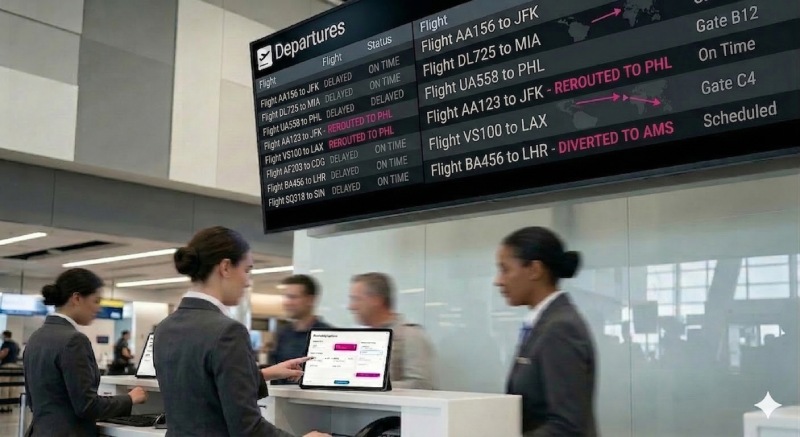
The true measure of Hong Kong airport’s route flexibility emerged in its comprehensive passenger care strategy and rapid recovery protocol during the unprecedented 36-hour disruption that affected approximately 140,000 passengers. Throughout the crisis, AAHK deployed its Passenger Care Team to provide assistance and distribute essential supplies including bottled water, snacks, blankets, towels, and even comfort items like cotton candy and popcorn, while children were given drawing materials to pass the time.
Several restaurants and shops remained open 24 hours, demonstrating the airport’s commitment to passenger welfare during extended disruptions.
To maintain operational capability, AAHK implemented innovative ground transport solutions by activating the Taxi Queue Ticket System through kiosks and mobile applications, providing shuttle buses for airport staff between the airport and Tung Chung, and established staff rest areas to ensure adequate staffing levels. The airport’s Flight Rescheduling Control System enabled airlines to plan for service resumption while weather permitted, facilitating a phased recovery that began with limited cargo operations on September 24 and progressed to passenger services from 6 AM on September 25. This swift restoration, with the airport handling approximately 1,000 flights on the first full day of resumed operations, demonstrated that route flexibility encompasses not merely the tactical ability to cancel or reroute individual flights, but also the strategic capacity to coordinate network-wide responses, maintain passenger welfare during disruption, protect critical infrastructure and assets, and execute recovery protocols that restore normal operations with minimal downstream effects on the broader regional aviation system.
Lessons for Airport Route Flexibility from Hong Kong
Drawing from the HKIA case study and supported by operational best practices, route flexibility must be understood not as a single capability but as an integrated framework comprising seven essential components:
1. Anticipatory Intelligence and Early Warning System
Proactive threat detection and predictive scenario planning are essential to activating crisis responses before disruptions escalate.
Effective anticipatory intelligence requires defined trigger thresholds. Chinese aviation industry emergency response protocols suggest a ‘Large-Scale Delay Alarm’ should be automatically activated when >10 flights are delayed over 4 hours or >1,000 passengers are stranded at a hub airport. HKIA’s activation of the Flight Rescheduling Control System 24 hours prior effectively lowered these thresholds, making it a strategic pre-evacuation. Airlines can reduce the impact of disruptions by bringing their commercial and operations teams into a single planning process, with contingency plans built with rerouting options to proactively move customers around major areas of disruption before problems escalate. Modern airports must invest in integrated data platforms combining meteorological forecasting, geopolitical risk intelligence, operational performance analytics, and real-time demand monitoring. This requires moving beyond reactive crisis management to predictive scenario planning that identifies emerging threats before they materialise into operational failures.
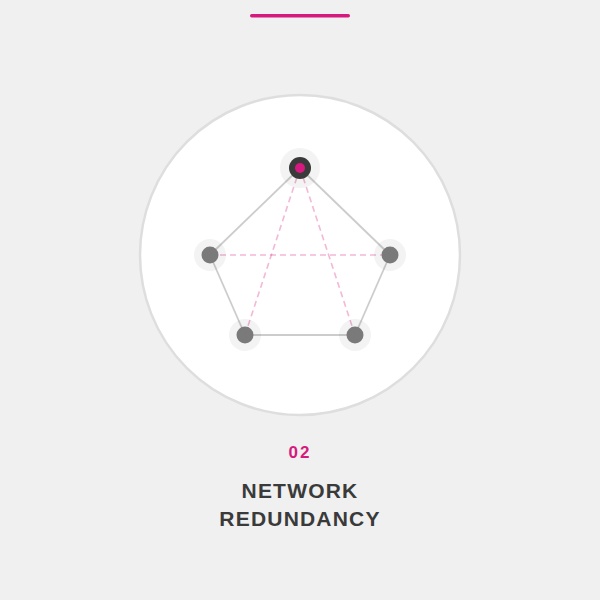
2. Network Redundancy and Alternative Routing Architecture
Resilient networks depend on flexible scheduling, preserved connection structures, and pre-negotiated capacity sharing to enable rapid rerouting during disruptions.
Network redundancy is often hampered by the ‘blocking effect,’ where rigid slot allocation rules displace flights from their requested times, forcing airlines into suboptimal scheduling that reduces their ability to respond flexibly when disruptions occur. This inflexibility can then trigger cascading cancellations as aircraft and crew fall out of position.
Scheduling rigidity therefore directly undermines network redundancy, because airlines cannot reroute passengers through alternative connections if the wave structure has already collapsed. True flexibility requires preserving ‘Flight Wave’ integrity, the synchronised banks of arrivals and departures that allow passengers to connect between flights. If the airport abandons this coordinated pattern during a crisis and just lets flights go whenever slots are available, passengers lose their ability to connect and get stuck.
Block times should be far more dynamic, adjusting to changing congestion or airport conditions, with crews flexibly assigned as the day of operation approaches. Flexible infrastructure is essential for operational resilience, allowing airports to accommodate spatial needs that currently can’t be predicted.
During Ragasa, Cathay Pacific rebooked stranded passengers onto partner airlines and offered rerouting through alternative hubs, but this was largely reactive. Formalising such arrangements through pre-negotiated capacity sharing protocols would enable faster, more coordinated responses to future disruptions. Airports must cultivate strategic partnerships with multiple carriers across diverse geographic corridors, ensuring that when primary routes become unavailable, passengers and cargo can be seamlessly transferred through alternative networks. This requires reciprocal agreements, interline arrangements, and standing crisis-response frameworks that can be activated immediately.
3. Asset Protection and Strategic Fleet Positioning
Proactive fleet repositioning and modular infrastructure design safeguard both mobile and fixed assets while enabling faster post-disruption recovery.
About 80% of aircraft belonging to Hong Kong’s four major carriers had been relocated to airports in Japan, China, Cambodia, Europe, Australia and other locations before the storm arrived. Cathay Group ferried more than 50 aircraft outside Hong Kong to the Chinese mainland and Southeast Asia to minimise the chance of aircraft damage. The proactive repositioning of aircraft outside Hong Kong before the typhoon’s arrival prevented asset damage while simultaneously positioning capacity for rapid service restoration. Airlines and airports must develop protocols for rapid aircraft redeployment.
While fleet positioning protects mobile assets, fixed infrastructure must also adhere to flexible design principles. For instance, Heathrow operates two runways at near-maximum capacity and has been debating a third runway for decades. Changi Airport Group confirmed that Terminal 5’s capacity is modularised as much as possible so it can be expanded according to future market demand.This demonstrate that physical adaptability, such as convertible gate usage and scalable terminal operations, is a prerequisite for recovering from asset denial events.
4. Passenger-Centric Crisis Management
Crisis infrastructure must seamlessly pivot to prioritise passenger welfare through pre-planned care provisions, flexible rebooking, and real-time communication.
HKIA’s comprehensive passenger care strategy, from emergency rest areas and 24-hour retail operations to the Taxi Queue Ticket System and real-time communication, transformed a potential humanitarian crisis into a managed inconvenience.
Airport planners must design infrastructure that can shift from normal operations to crisis mode without major reconfiguration. This requires pre-positioned supplies, trained passenger assistance teams, multi-channel communication systems, and flexible rebooking policies that prioritise customer welfare over operational rigidity. Tools like customer data platforms increasingly underpin this kind of communication by allowing messages to be targeted by affected flight, route, vulnerability profile or preferred channel, rather than relying on undifferentiated mass alerts.
5. Multi-Stakeholder Coordination and Collaborative Decision-Making
Unified command centres and pre-established coordination protocols among all stakeholders are essential for coherent crisis response and rapid recovery.
The activation of HKIA’s Airport Emergency Centre, bringing together the Airport Authority, Civil Aviation Department, and airline representatives, exemplifies the critical importance of institutional coordination.
Airport Operations Centres that bring together decision-makers from all stakeholders in a single room, as HKIA demonstrated, are essential for full restart and recovery when traffic volumes reach ultimate highs.
Route flexibility cannot be achieved unilaterally. It requires formal coordination mechanisms, shared information systems, aligned performance metrics, and pre-negotiated protocols for collaborative crisis response across all airport stakeholders.
6. Phased Recovery and Progressive Restoration
Structured, tiered recovery frameworks must prioritise safety first, then progressively restore capacity to prevent system overload during the critical restart phase.
HKIA’s deliberate recovery sequence demonstrates the importance of structured restoration protocols. Contingency planning should ensure that safety and security requirements are met first, with plans developed to deal with emergency and degraded modes of operation (reduced capacity or partial systems) before implementing service continuity measures. Airports must develop tiered recovery frameworks that prioritise critical functions, sequence capacity restoration, and manage demand re-entry to prevent system overload during the vulnerable recovery phase.
7. Institutional Learning and Continuous Adaptation
Systematic after-action reviews, regular crisis simulations, and adaptive organisational cultures turn each disruption into a catalyst for stronger future resilience.
Improving airport network resilience requires a system-wide approach, with formal collaboration frameworks between industry and government that enable coordinated responses to global-scale disruptive events.
Each disruption provides invaluable data for refining future responses. Successful airports implement formal after-action review processes, continuously update contingency plans based on lessons learned, conduct regular crisis simulation exercises, and maintain organisational cultures that value adaptation over rigid adherence to outdated procedures.
The Challenge of Scalability and Equity
HKIA’s resource-rich model cannot be directly replicated by smaller airports, but its core principles can be scaled through low-cost, collaborative interventions. Prioritising mutual aid partnerships, cross-trained staff, and disciplined institutional learning builds meaningful resilience within realistic constraints.
While Hong Kong International Airport’s response to Super Typhoon Ragasa exemplifies best-in-class crisis management, it’s critical to acknowledge that HKIA operates with significant structural advantages unavailable to most airports globally. As one of the world’s busiest cargo hubs and a major international gateway, HKIA benefits from substantial financial resources, advanced technological infrastructure, a deeply integrated relationship with home carrier Cathay Pacific (enabling coordinated fleet positioning and network flexibility), and Hong Kong’s position as a global financial centre that justifies sustained infrastructure investment.
However, small and medium sized airports face fundamentally different resource constraints: limited capital budgets, minimal influence over airline route decisions, dependence on a small number of carriers with no ownership stake in the airport’s success, aging infrastructure with limited flexibility for repurposing, and operational teams stretched thin across multiple responsibilities without dedicated crisis management staff.
While major hubs benefit from ‘star-shaped redundancy’—multiple redundant connections radiating to the same destination—regional airports often rely on linear connections to a single hub. This makes them uniquely vulnerable to disruptions in ‘Flight Waves.’ When a major hub like HKIA adjusts its wave of arrivals and departures, it has the volume to recover.
However, for a regional feeder airport, the disruption of a single wave can sever its only link to the global network, creating a disproportionate connectivity loss. The question, then, is not whether smaller airports should aspire to HKIA’s comprehensive approach, but rather how they can achieve meaningful operational resilience within realistic financial and institutional constraints.
The pathway to scalable resilience lies in prioritising low-cost, high-impact interventions that leverage collaboration over capital expenditure.
For anticipatory intelligence, smaller airports can join regional coordination networks. Organisations like EUROCONTROL’s Network Manager or regional ACI chapters provide shared situational awareness, operational data, and collaborative frameworks that individual airports could not develop alone. For network redundancy, the key is formalising mutual aid agreements with 2-3 neighbouring airports, establishing reciprocal capacity-sharing protocols that cost nothing to negotiate but provide critical alternatives during disruptions. If Airport A faces closure, passengers are proactively rerouted to Airport B, and vice versa. Asset protection for smaller airports focuses not on repositioning aircraft (which they cannot control) but on protecting ground equipment, pre-positioning generators, fuel supplies, and spare parts that enable rapid recovery. Passenger-centric crisis management requires trained staff more than expensive infrastructure. Cross-training existing customer service personnel in crisis communication protocols, pre-positioning modest supply caches (water, blankets, first aid kits scaled to 5% of daily passenger volume), and leveraging free communication channels (social media, SMS alerts via existing systems) can transform passenger experience at minimal cost.
For airports that already collect passenger data through apps, parking systems, or loyalty programmes, consolidating that information through a customer data platform can make segmented crisis communications operationally feasible, reaching the right passenger groups via their preferred channel.
Multi-stakeholder coordination can be reinforced through regular quarterly meetings with airlines, ground handlers, and local emergency services, a format many airports already practice in some form, used to maintain working relationships and rehearse scenarios across the range of plausible disruptions, from weather events to IT outages to security incidents. In this area, institutional trust built over time tends to matter more than sophisticated technology. Phased recovery protocols lend themselves to lightweight formats such as checklists, decision trees, that don’t presuppose heavy IT investment, and the same underlying logic applies whether the trigger is a runway closure, a system outage, or a sudden surge in stranded passengers. Institutional learning is more a matter of discipline than budget: short debriefs after any operational disruption, regardless of cause, and a shared internal record of lessons learned are often enough to sustain continuous improvement. The value compounds precisely because the patterns surfaced rarely sit neatly within one threat category.
For airports operating under significant resource constraints, three levers appear particularly accessible, whether as new initiatives or as ways to consolidate existing arrangements:
- formalising one mutual aid agreement with a neighbouring airport, usable across disruption types;
- running periodic tabletop simulations involving operational stakeholders, ideally rotating the triggering scenario;
- maintaining a pre-positioned emergency supply cache at a strategic terminal location.
None of these require significant additional budget. The aim is not to replicate HKIA’s infrastructure, which reflects a specific context and scale, but to identify within its experience the principles that may translate to local circumstances.
The Hong Kong International Airport case study lends support to what the disruption typologies in Part 1 suggested: resilience is less about preparing for specific threats than about building institutional capabilities that function regardless of the trigger, whether that trigger is a typhoon, an airspace closure, a cyberattack, an IT failure, a security incident, industrial action, or a public health emergency. HKIA did not succeed because it had a typhoon plan; it succeeded because its flexibility infrastructure would likely have served equally well across any of these triggers. The typhoon was the test the airport happened to face; the capabilities that carried it through were not typhoon-specific.
This distinction seems important, because the temptation after any well-managed crisis is to codify the response into a playbook narrowly tailored to the scenario encountered such as a “typhoon manual”, a “cyberattack manual”, a “drone incursion manual”, each developed in isolation and each likely to disappoint when the next disruption fails to match the template. The reading of HKIA we propose points the other way: investment in adaptable, cross-cutting capabilities tends to pay off more durably than scenario-specific procedures, precisely because future disruptions are unlikely to announce themselves in the categories we have prepared for. In an increasingly volatile operating environment, flexibility is perhaps best understood not as an emergency measure but as an institutional competency embedded in day-to-day operations, a horizon accessible to airports of every size, each on its own terms and according to its means.